Signed in as:
filler@godaddy.com
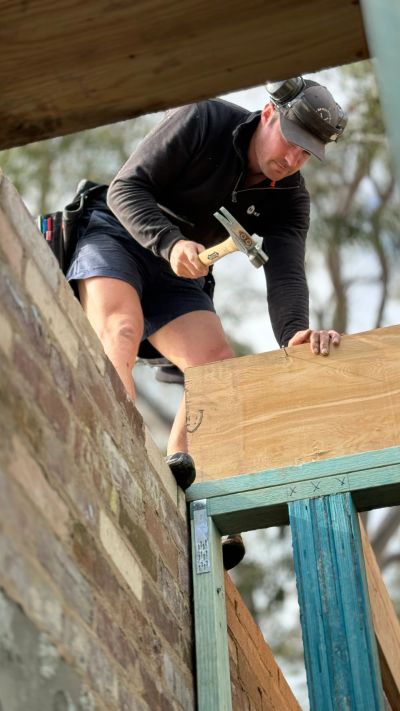
I've been building in Sydney's Inner West for over 15 years. Heritage terraces in Balmain, extensions in Rozelle, ground-up builds in Leichhardt. Before that, high-end residential projects in London. And before I was a builder, I was a homeowner who sat across the table from one, wondering if I was getting the full picture.
So when I say the process of choosing a builder in Sydney is harder than it should be, I'm not being dramatic. I've seen it from both sides. And the gap between a builder who is genuinely right for your project and one who just appears to be is wider than most people realise until they're already committed.
This post is my attempt to close that gap. Not with a generic checklist you could find anywhere, but with the specific things I'd tell my own family to look for before signing with anyone.
I should say upfront: bespoke building costs more than volume building. It takes longer. If you are working to a very tight budget or need to be in by Christmas at any cost, a custom builder may not be what you need right now, and any honest builder should tell you that. What bespoke building gives you is a result that was designed and built specifically for your site, your brief, and your life. For the right project, nothing else comes close.
One thing I notice when people move to Sydney from interstate or overseas is how quickly they learn that every suburb here has its own rules. Not just council regulations, though those vary significantly, but the physical reality of the land itself. The Inner West sits on a mix of sandstone, shale, and filled ground that behaves very differently from one street to the next. Coastal properties in the Eastern Suburbs face corrosion exposure that inland builds don't. Homes on Sydney's northern ridge lines deal with aspect, bushfire overlays, and slope in combinations that require genuine site-specific thinking.
A builder who has spent their career doing volume residential work in Western Sydney or the Central Coast is not automatically equipped for a heritage terrace in Annandale or a sandstone-foundation extension in Balmain. The skills overlap, but the specific knowledge doesn't transfer automatically. When you're assessing any builder, the first question isn't how long they've been building. It's where they've been building, and whether that experience maps onto what you're actually trying to do.
From the field
A builder who has never worked with a heritage overlay before will underestimate how much time council compliance takes. That underestimate ends up in your timeline and sometimes in your budget. Ask specifically whether they've worked on projects under your local council's jurisdiction.
Before a single piece of timber goes up, you'll spend a significant amount of time in the design phase. How a builder handles that phase reveals more about how the whole project will go than almost anything else.
The builders I've seen deliver consistently great outcomes are the ones who treat design as a collaborative process, not a formality before construction starts. They're asking questions about how you actually live in the house. They're raising practical issues early, before those issues become expensive surprises on site. They're not just telling you what you want to hear to get you across the line.
In Sydney specifically, the design phase needs to account for a few things that generic builders often underweight. Passive solar design matters here more than people realise; a well-oriented house with cross-ventilation can dramatically reduce energy costs and improve liveability without adding a dollar to the build cost, but only if it's thought about at the design stage. Council compliance is another area where experience shows. Development Applications in councils like Inner West, Waverley, or North Sydney can be complex and slow. A builder who has navigated those processes repeatedly will know where the pinch points are and how to avoid them. One who hasn't will learn on your project.
What to ask
Ask the builder to walk you through a recent project that hit a design complication. How did they identify it, when did they raise it with the client, and how was it resolved? The answer tells you a lot about whether they're the kind of builder who surfaces problems early or one who waits until the issue forces their hand.
I have a fairly simple view on quotes. A quote that doesn't break down what's included isn't a quote. It's a number. And a number without context is almost meaningless when you're trying to compare builders honestly.
The specific things to look for in a detailed quote are the line items that builders most often leave vague. Provisional sums, which are estimates for work that can't be fully priced at signing, are one of the most common sources of budget blowout I see. A contract can contain significant amounts in provisional sums and still look like a fixed-price agreement on the surface. If you don't read it carefully, you won't know until the costs come in higher than estimated, which they often do.
Ask for every provisional sum to be explained. How was the figure derived? Is it based on a real quote from a subcontractor, an industry average, or an educated guess? Could the item be fully specified now to remove the uncertainty? These are reasonable questions and a good builder will answer them without hesitation.
Also check what's explicitly excluded. Rubbish removal, temporary fencing, site preparation, and council fees are regularly left out of preliminary pricing and show up later as additions. Asking for the exclusions schedule to be reviewed line by line before you sign is one of the most straightforward protections available to you.
Worth knowing
Under the NSW Home Building Act, variations must be agreed in writing before work begins. A builder who proceeds with a change without written agreement may lose the right to claim payment for it. That cuts both ways: it protects you from surprise costs, but only if you hold the line on getting everything documented.
There's a lot of marketing language in this industry. "Bespoke," "custom," and "luxury" are applied so freely that they've almost stopped meaning anything. Here's what I think those words should actually translate to in practice.
What to look for in a genuine bespoke builder
Most first meetings with builders follow a fairly predictable script. They show you their portfolio, talk about their process, and ask about your budget and timeline. That's fine as a starting point. But the questions that actually reveal whether a builder is right for your project are the ones that most homeowners don't think to ask until it's too late.
Here are the ones I'd want answered before I committed to anything.
Who will actually be on my site day to day, and can I meet them before I sign?
How many projects are you running at the same time as mine?
Can you show me a project that ran into a serious problem and explain how you handled it?
Have you worked under my local council's DA process before? Which projects?
What insurance do you carry, and can I see the certificates now?
Walk me through every provisional sum in this contract and how each figure was arrived at.
A builder who is genuinely right for your project will not find these questions threatening. They'll have answers. The ones who deflect, get vague, or seem surprised you're asking are giving you important information before a single dollar changes hands.
From the field
The builder you meet in the sales process might not be the person managing your site. I've seen homeowners fall in love with a builder in the initial meetings and then barely see them once work starts. Meet the site supervisor before you sign. Make sure you'd be comfortable calling them if something wasn't right.